 Bookmark
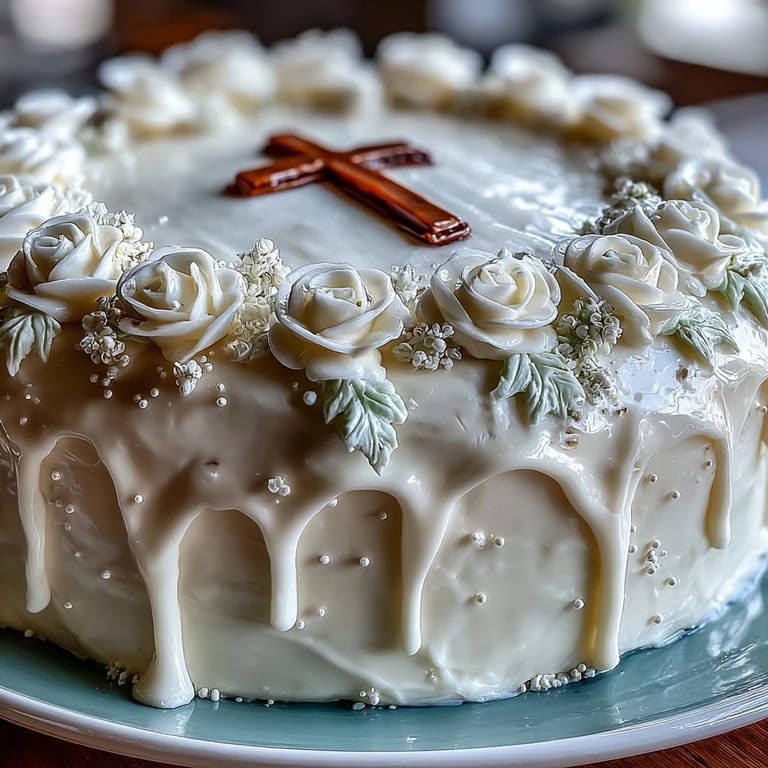
 My hands were shaking a little the first time I made a First Communion cake, partly from nerves and partly because I wanted it to feel right. There's something about baking for a milestone like this—you're not just making dessert, you're creating something tied to memory and celebration. I chose vanilla sponge because it's honest and elegant, the kind of cake that lets you focus on what matters: those delicate fondant roses and the simple cross on top. It turns out that building a cake layer by layer mirrors the occasion itself—careful, intentional, and deeply personal.
I watched a baker friend frost a celebration cake once with the kind of focus usually reserved for important work, and I realized that's exactly what this is. She moved her offset spatula with quiet confidence, turning the cake slowly, creating smooth walls of buttercream. When she placed the cross on top and stepped back, there was this pause—like she was honoring both the craft and the occasion at the same time. That's when I understood why this cake matters; it demands your attention because the people eating it will remember the care you put in.
Ingredients
- All-purpose flour (2 ½ cups): Measure by spooning and leveling, not scooping straight from the bag, or your cake risks being dense—I learned this the hard way.
- Baking powder (2 ½ tsp): Check the date on the container; old leavening makes flat, sad cakes with no rise.
- Unsalted butter (1 cup for sponge, 1 ½ cups for frosting): Room temperature is non-negotiable; cold butter won't cream properly and you'll end up with streaky frosting.
- Granulated sugar (2 cups): The creaming process takes about 3 minutes—don't rush it, as this creates the tender crumb you're after.
- Large eggs (4): Room temperature eggs incorporate more smoothly, creating a lighter batter than cold ones straight from the fridge.
- Pure vanilla extract (1 tbsp for sponge, 2 tsp for frosting): Real vanilla makes a difference here; imitation can taste slightly metallic against the delicate flavors.
- Whole milk (1 cup): Room temperature helps it blend seamlessly into the batter without shocking the mixture.
- Powdered sugar (5 cups): Always sift it first—lumps in buttercream are impossible to hide.
- Heavy cream or milk (3–4 tbsp): This gives you control over frosting consistency; add a tablespoon at a time until it's spreadable but holds peaks.
- White fondant (16 oz): Buy quality fondant if you can; cheaper versions can be grainier and harder to shape into smooth roses.
- Cross topper: Having this ready before you start decorating means you won't panic at the end wondering where it is.
Tired of Takeout? 🥡
Get 10 meals you can make faster than delivery arrives. Seriously.
One email. No spam. Unsubscribe anytime.
Instructions
- Set up your space:
- Preheat the oven to 350°F and grease both 8-inch pans with a light hand—you want them non-stick but not greasy. Line the bottoms with parchment paper so your layers slide out cleanly.
- Make the dry blend:
- Whisk flour, baking powder, and salt together in a medium bowl, making sure the leavening is evenly distributed. This prevents dense pockets in your cake.
- Cream the base:
- Beat softened butter and sugar together until they're pale and fluffy, roughly 3 minutes—this is where the cake's tender crumb begins. You should see ribbons of mixture fall from the beaters.
- Add eggs gradually:
- Crack each egg into the butter mixture one at a time, beating well after each addition so they fully incorporate. If you dump them all in at once, the batter can look curdled.
- Bring in vanilla:
- Mix in the vanilla extract until the batter is smooth and unified.
- Alternate wet and dry:
- With the mixer on low speed, add about a third of the flour mixture, then half the milk, then another third of flour, then the remaining milk, then the last of the flour. This keeps the batter from becoming tough. Mix just until combined—overbeating develops gluten, which makes the cake dense.
- Fill and smooth:
- Divide the batter evenly between the prepared pans and smooth the tops with an offset spatula so they bake level. Even layers make frosting easier later.
- Bake until golden:
- Bake for 30–35 minutes until a toothpick inserted in the center comes out clean or with just a few moist crumbs. Don't overbake or the cake will be dry.
- Cool with patience:
- Let the cakes rest in their pans for 10 minutes—this helps them set—then turn them out onto wire racks to cool completely. Frosting a warm cake is a recipe for melted frosting mess.
- Make silky buttercream:
- Beat softened butter until creamy, then gradually add sifted powdered sugar a cup at a time, scraping the bowl often. Add vanilla and salt, then milk or cream one tablespoon at a time until the frosting reaches soft peaks—it should hold shape but spread easily.
- Level and stack:
- If your cake layers have domed tops, level them with a serrated knife so they stack straight. Place one layer on your cake board and spread a generous layer of buttercream on top.
- Build the cake:
- Top with the second layer and coat the entire cake with a thin crumb coat—just enough frosting to catch any stray crumbs. Chill for 20 minutes so the crumb coat sets.
- Finish with frosting:
- Apply a final, smooth layer of buttercream, using your offset spatula to create soft, even walls. Take your time here; people notice the frosting finish first.
- Shape fondant roses:
- Roll white fondant to 1/8-inch thickness and cut small circles or petal shapes. Roll each into a ball, flatten, and layer them loosely to form a rose shape—think of an opening flower, not a perfect symmetrical bloom. The imperfect ones look more alive.
- Tint green leaves:
- If making leaves, knead a tiny bit of green gel coloring into a small portion of fondant and roll thin, leaf-shaped pieces. A toothpick can score veins into them.
- Decorate the cake:
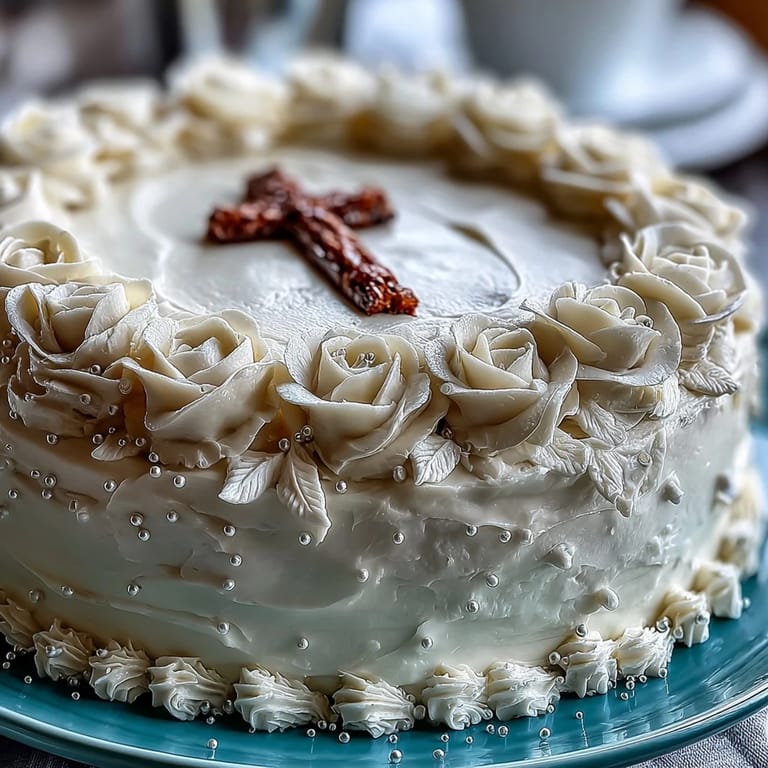
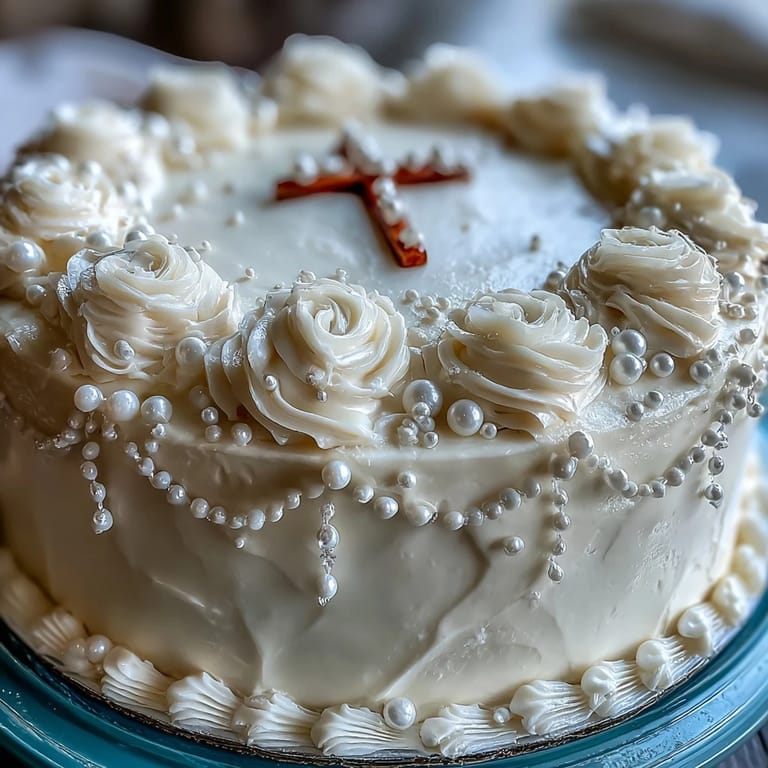
- Arrange your fondant roses and leaves on the frosted cake in a gentle, balanced pattern. You can place them all on one side or scatter them softly around the cake.
- Add finishing touches:
- Press edible pearls or silver dragees between the roses for subtle sparkle if desired.
- Crown with the cross:
- Set the cross topper at the center or as high as it feels balanced, nestling it gently into the frosting or propping it on a fondant base if needed.
- Chill before serving:
- Refrigerate the finished cake for at least 30 minutes to firm up the buttercream and fondant before the celebration.
 Bookmark
 There's a quiet moment that happens when you step back from a finished celebration cake—when all the layering and frosting and delicate petal-shaping is done. It's not just cake anymore; it's a small monument to someone's milestone, a vanilla-scented reminder that you cared enough to spend your afternoon carefully. That feeling is worth every minute of planning.
Why Room Temperature Matters
I once tried to cream cold butter straight from the fridge with sugar because I was in a hurry, and the mixture looked grainy and separated no matter how long I beat it. It took me three failed batches to understand that room temperature isn't just a suggestion—it's the foundation of a smooth, fluffy batter. Warm butter incorporates air easily, eggs blend in seamlessly, and everything becomes cohesive. Cold ingredients, by contrast, resist mixing and create pockets of undissolved sugar or butter, which translates to dense, uneven crumbs in your finished cake.
The Crumb Coat Secret
The first time I skipped the crumb coat, I told myself I was saving time. What I actually did was trap loose crumbs in my final frosting layer, making the cake look spotted and rough instead of smooth. Now I don't skip it; that thin initial coat is like a primer for the canvas. It takes five minutes and changes everything about how the cake looks when it's done.
Decorating with Intention
Fondant roses don't need to be perfect museum pieces; they need to feel like someone made them with care. I used to stress about symmetry until I realized that slightly imperfect petals actually look more like real flowers, and people connect with that authenticity. The cross on top is the focal point anyway—the roses are there to frame it gently, not to compete.
- Shape your roses a few hours before decorating, not the night before, or they'll dry out and crack when you try to position them.
- If a fondant rose falls apart while you're handling it, just peel the petals off and reshape them—fondant is very forgiving.
- The cake tastes best when served at cool room temperature, so pull it from the fridge about 15 minutes before cutting to let the flavors soften a little.
 Bookmark
 This cake is a love letter baked in flour and butter, frosted smooth, and crowned with a symbol of grace. Make it with presence, and it becomes something beautiful.
Recipe Questions
- → What is the best way to achieve tender sponge layers?
Use room temperature ingredients and avoid overmixing the batter to keep layers light and tender.
- → How do I make smooth and creamy buttercream frosting?
Beat softened butter until fluffy, gradually add powdered sugar and vanilla, then incorporate milk or cream for the right consistency.
- → What is the recommended method for shaping fondant roses?
Roll small fondant balls, flatten and shape into petals, then assemble them layer by layer for realistic roses.
- → Can the cake be prepared ahead of time?
Yes, bake and chill the sponge layers before applying buttercream and fondant decorations for easier handling.
- → How to store the finished cake to maintain freshness?
Keep the decorated cake refrigerated in a covered cake box to preserve moisture and prevent drying.