 Bookmark
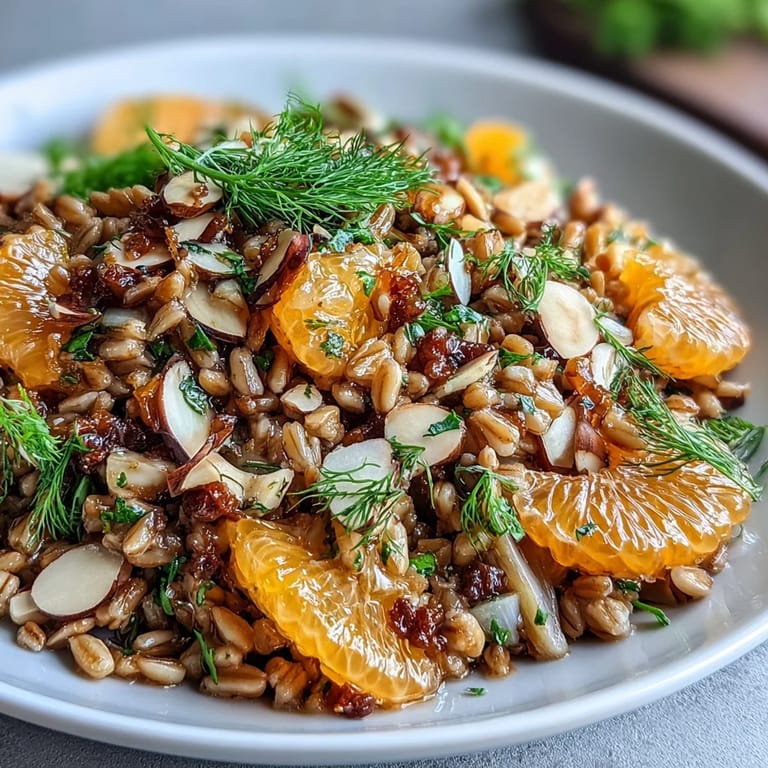
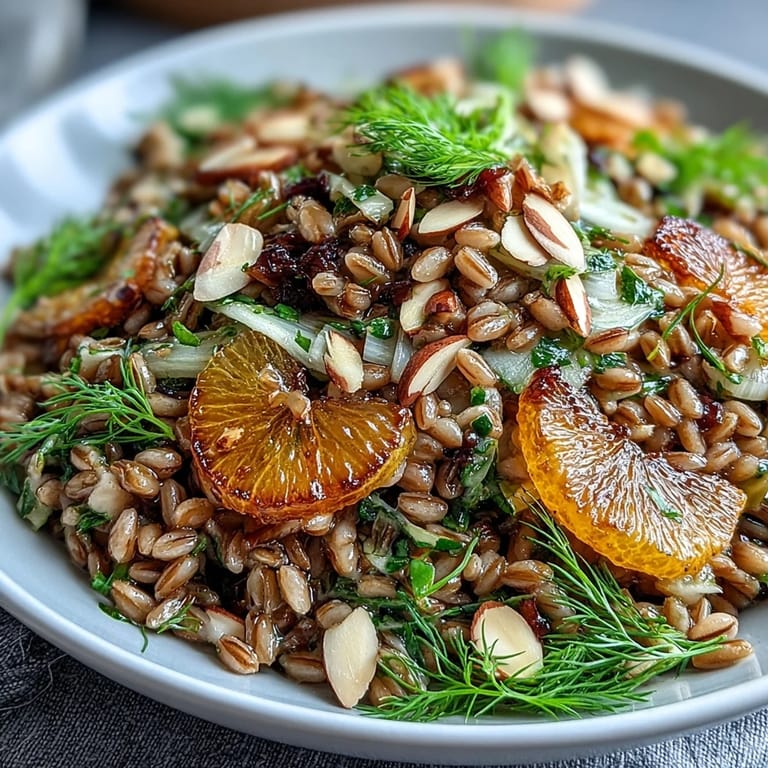
 Last spring, I was sorting through a farmers market and spotted a bundle of fennel so pale and delicate it seemed almost fragile. The vendor mentioned it pairs beautifully with citrus, and something clicked—I'd been craving salads that actually felt substantial, not just decorative. That afternoon, I threw together farro, those silky fennel slices, bright orange segments, and toasted almonds, and suddenly lunch didn't feel like an afterthought anymore.
I made this for a potluck once where everyone brought their usual pasta salad, and someone actually asked if I'd ordered it from somewhere. What surprised me most wasn't the compliment—it was watching people go back for thirds, and realizing a simple salad could be the most memorable thing on the table.
Ingredients
- Whole grain farro: This isn't the quick-cooking kind—look for the true whole grain farro, which holds its chew and nutty flavor beautifully, and doesn't dissolve into mush the way some grains do.
- Water and kosher salt: The salt should go into the cooking water, not just sprinkled on top, so every grain absorbs seasoning evenly from the start.
- Fennel bulb: Slice it paper-thin so it softens just enough to stay crisp—thick slices can taste tough and overwhelming.
- Fresh oranges: Segment them yourself rather than using juice; you want the actual fruit, not just liquid, so you get those bursts of sweetness and that textural contrast.
- Arugula or spinach: Either works, but the peppery bite of arugula wakes up the whole salad in a way mild greens sometimes can't.
- Fresh parsley: This is your quiet flavor anchor—it brings everything together without announcing itself.
- Sliced almonds, toasted: Toast them yourself in a dry pan and watch them carefully; they go from golden to burnt in about thirty seconds, but toasted almonds have a complexity that raw ones simply don't possess.
- Extra-virgin olive oil: Use something you actually like tasting, because there's nowhere to hide in a simple vinaigrette.
- Orange juice and lemon juice: Fresh-squeezed matters here; bottled juice tastes flat and slightly metallic by comparison.
- Honey or maple syrup: Just a teaspoon balances the acidity and adds a whisper of sweetness that keeps you from puckering.
- Dijon mustard: This acts as an emulsifier, helping the dressing cling to the salad instead of pooling at the bottom of the bowl.
Tired of Takeout? 🥡
Get 10 meals you can make faster than delivery arrives. Seriously.
One email. No spam. Unsubscribe anytime.
Instructions
- Prepare your farro:
- Rinse the farro under cold water until it runs clear—this removes any starch coating and prevents the cooked grain from clumping. Combine it with water and salt in a medium saucepan, bring to a boil, then lower the heat and cover, letting it simmer gently for 25 to 30 minutes until each grain is tender but still has a slight resistance when you bite it.
- Toast the almonds:
- While the farro cooks, place sliced almonds in a dry skillet over medium heat and listen for them to start crackling—that's your signal they're waking up. Stir them frequently for about 2 to 3 minutes until they turn golden and smell absolutely irresistible, then immediately tip them onto a plate so they don't burn.
- Build your base:
- Once the farro has cooled to room temperature, combine it in a large bowl with your thinly sliced fennel, orange segments, greens, and fresh parsley. This is where you're setting up all your textures and flavors to play together.
- Make the dressing:
- In a small bowl or jar, whisk together the olive oil, fresh citrus juices, honey, mustard, salt, and pepper until the mixture becomes glossy and emulsified—the mustard is doing the real work here, binding everything into something cohesive rather than a separated puddle.
- Dress and finish:
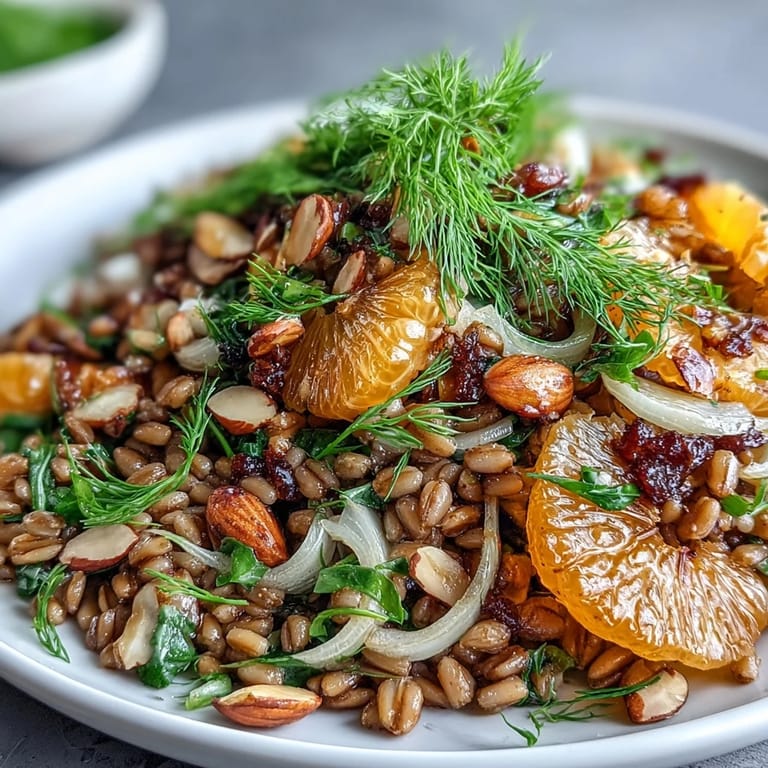
- Pour your dressing over the salad and toss gently so every piece gets coated without crushing the delicate arugula. Scatter the toasted almonds on top, finish with a few reserved fennel fronds for a hint of anise flavor and visual lightness, then serve right away or chill until you're ready.
 Bookmark
 There's a moment, right when you take that first bite and all those flavors and textures converge, where you understand why people actually enjoy eating salad. It's not about virtue or health trends—it's simply because it tastes good and makes you feel lighter afterward, not sluggish.
Why This Salad Became My Default
I stopped seeing salads as something I had to eat and started thinking of them as an actual meal when I realized farro was the missing piece. Farro has this natural nuttiness that makes it feel substantial in a way that raw vegetables alone never quite manage, and because it's a grain you cook, it feels like you've actually made something rather than just assembled ingredients.
Seasonal Swaps and Variations
Blood oranges show up in winter and transform this into something almost jewel-toned and more complex—their flavor goes deeper than regular oranges. In summer, I've substituted grilled stone fruits for the oranges and it's completely different but equally good, a reminder that the core of this salad is flexible enough to follow what's actually good at the market.
Making This Work for Different Diets and Occasions
The base salad is already vegetarian, and if you need it vegan, swap the honey for maple syrup or agave and you're done. For anyone avoiding gluten, barley and quinoa swap in seamlessly for the farro and honestly taste just as good, which surprised me the first time I made that substitution.
- If you're adding protein like grilled chicken or roasted chickpeas, add it just before serving so it stays warm and doesn't get lost in the cold salad.
- This salad travels well if you keep the dressing separate and pack it in a jar—toss it together right before you eat and everything stays fresh and crisp.
- A crisp Sauvignon Blanc or light Vermentino alongside this makes lunch feel like an actual occasion instead of just fuel.
 Bookmark
 This salad somehow works for a packed lunch, a side dish at dinner, or the main event at a gathering—it's one of those recipes that proves you don't need complexity to make food that people actually want to eat. Keep it in your rotation and you'll find yourself making it again and again.
Recipe Questions
- → What does farro taste like?
Farro has a pleasant nutty flavor with subtle earthy notes. When cooked, it becomes tender yet retains a satisfying chewy texture that adds substance to the bowl.
- → Can I make this ahead of time?
Absolutely. Prepare the farro in advance and store it separately from the dressing and delicate ingredients. Combine everything shortly before serving to maintain the crisp texture of the fennel and almonds.
- → What can I substitute for farro?
Barley offers a similar chewy texture, while quinoa provides a lighter alternative and makes the dish gluten-free. Both grains work well with the citrus and fennel flavors.
- → How do I cut fennel properly?
Trim the stalks and root end, then slice the bulb in half lengthwise. Remove the tough core, then thinly slice crosswise for delicate ribbons that blend perfectly with the grain.
- → What other citrus fruits work here?
Blood oranges add striking color with a slightly sweeter profile. Grapefruit offers a tangier note while maintaining the refreshing citrus element that balances the nutty grain.
- → How long does this keep in the refrigerator?
Stored in an airtight container, the dressed bowl keeps well for 2-3 days. The flavors meld beautifully over time, though the almonds will lose some of their crunch.