 Bookmark
 My coworker Sarah brought one of these bowls to lunch last summer, and the way she drizzled that peanut sauce over everything was almost meditative. I watched her squeeze lime over the top, and the whole container smelled like a Southeast Asian street market had somehow fit into our office break room. She offered me a bite, and I was immediately hooked—it tasted nothing like the sad desk lunches I'd been making. That afternoon, I went home and started experimenting with my own version, determined to crack the balance of that creamy, tangy sauce.
I made this for my sister during a lazy Sunday when she was between jobs and feeling a bit lost. She sat at my kitchen counter while I arranged the vegetables, and honestly, the ritual of building the bowl together felt therapeutic for both of us. When she tasted it, she actually closed her eyes for a moment, and then we spent the next hour talking about everything—jobs, life, what comes next. Food has this quiet power sometimes, doesn't it?
Ingredients
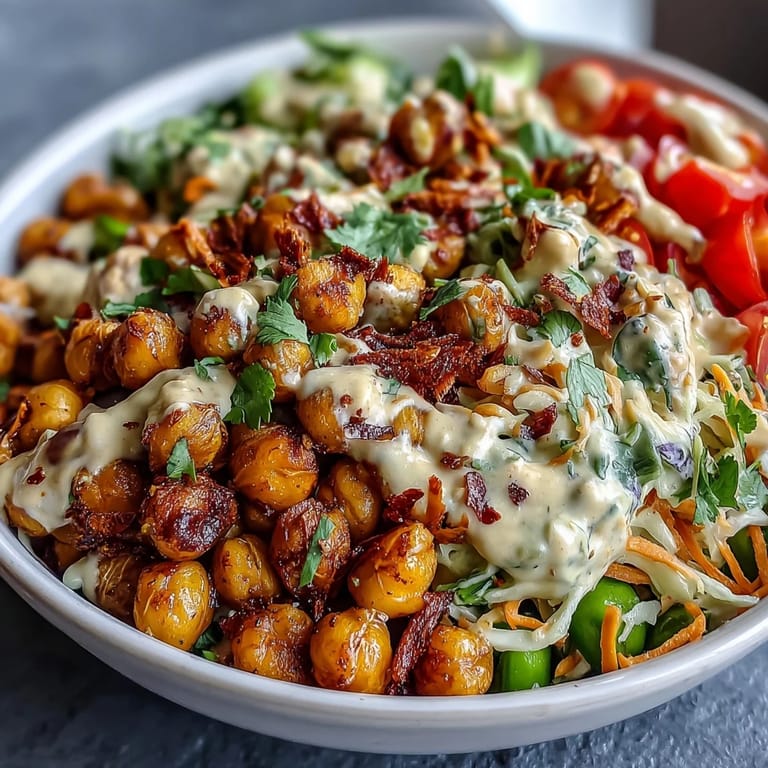
- Chickpeas (2 cans, drained and rinsed): These are your protein powerhouse, and rinsing them removes excess sodium and starch that can make them stick together during roasting.
- Olive oil (1 tbsp): Just enough to help the spices cling and create that crispy exterior without making them greasy.
- Smoked paprika, ground cumin, garlic powder, salt, and black pepper: This spice blend is the secret to making chickpeas taste like something special instead of canned.
- Brown rice or quinoa (2 cups cooked): The foundation that makes this a complete meal—I usually cook extra on Sundays so it's ready to go.
- Red cabbage (1 cup shredded): It stays crisp longer than most vegetables and adds a slight pepperiness that plays beautifully with peanut sauce.
- Carrots, cucumber, cherry tomatoes, and edamame: These bring color, crunch, and freshness that balance the richness of the sauce.
- Fresh cilantro (1/4 cup chopped): Don't skip this—it brightens everything and makes the bowl feel intentional rather than just assembled.
- Creamy peanut butter (1/3 cup): Use the kind with minimal added ingredients; the sauce depends on its smooth consistency and pure peanut flavor.
- Soy sauce or tamari (2 tbsp): This adds umami depth and saltiness that prevents the sauce from tasting one-dimensionally sweet.
- Maple syrup or honey (1 tbsp): A touch of sweetness rounds out the sauce and helps balance the vinegar and heat.
- Rice vinegar (1 tbsp): The acidity cuts through richness and keeps the sauce tasting bright and lively.
- Sriracha or chili sauce (1 tsp, optional): Add this only if you want heat—it's entirely optional and can always be adjusted at the table.
- Garlic (1 clove, finely minced): Fresh garlic in the sauce makes it taste alive; jarred just doesn't have the same punch.
- Roasted peanuts and sesame seeds: These finish the bowl with texture and remind you of its inspiration, so don't treat them as optional extras.
- Lime wedges: Always serve these alongside—a squeeze at the end transforms the whole experience.
Tired of Takeout? 🥡
Get 10 meals you can make faster than delivery arrives. Seriously.
One email. No spam. Unsubscribe anytime.
Instructions
- Fire up the oven and prep your chickpeas:
- Preheat to 425°F and line a baking sheet with parchment paper. In a bowl, toss the drained chickpeas with olive oil and all those spices until every one is coated—you want them glossy and fragrant.
- Get them golden and crispy:
- Spread the chickpeas in a single layer on the baking sheet and roast for 20 to 25 minutes, giving them a shake halfway through. You'll know they're done when they're golden brown and sound slightly hollow when you tap the pan.
- Make the sauce while they roast:
- Whisk together the peanut butter, soy sauce, maple syrup, rice vinegar, minced garlic, and that first splash of warm water. Start with 2 tablespoons of water and add more slowly until the sauce is pourable but still creamy—you want it to cling to the vegetables without pooling at the bottom.
- Prepare everything else:
- If your rice or quinoa isn't cooked yet, get that going now. Slice your vegetables, shred your cabbage, and have everything within arm's reach because assembly happens fast.
- Build your bowl:
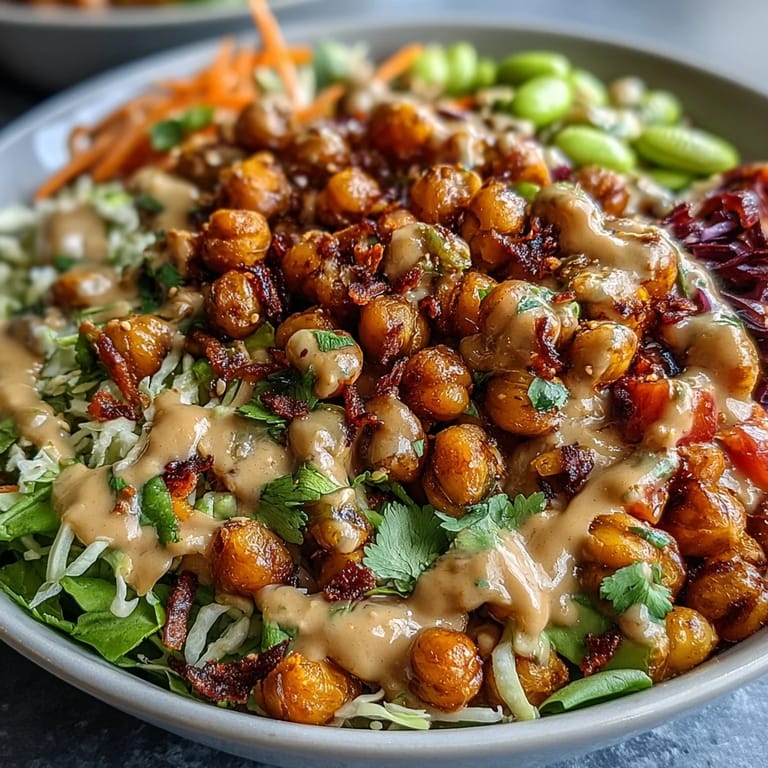
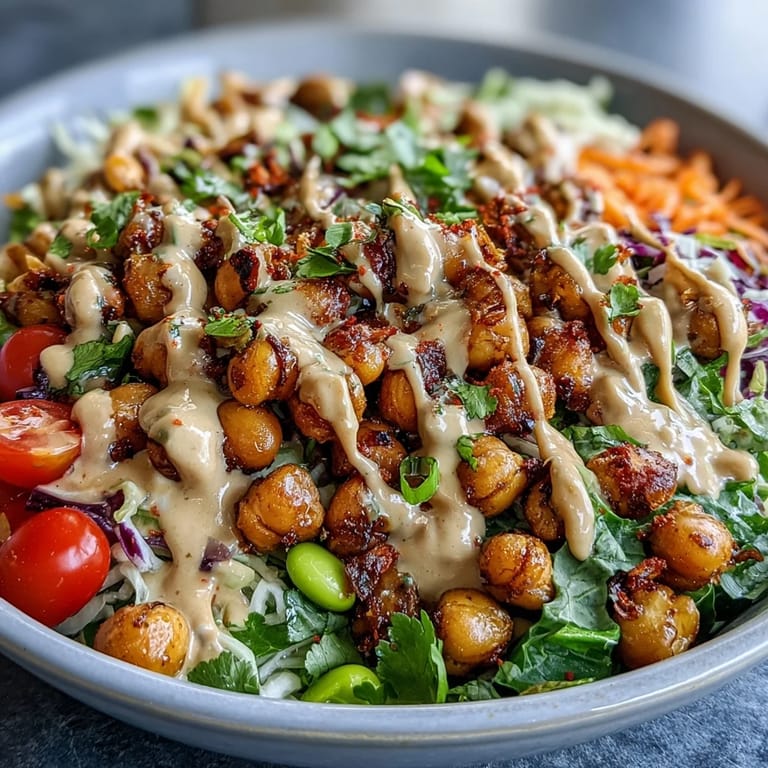
- Divide the cooked grain among four bowls, then arrange the chickpeas, cabbage, carrots, cucumber, tomatoes, and edamame on top. Scatter cilantro over everything.
- The finale:
- Drizzle the peanut sauce generously over each bowl, then sprinkle with roasted peanuts and sesame seeds. Serve with lime wedges so everyone can squeeze them in right before eating.
 Bookmark
 There's something about feeding yourself or someone else something this thoughtfully constructed that shifts your whole mood. My roommate came home that first night to find me setting up bowls like I was plating at a restaurant, and she laughed at me until she took a bite, then she was quiet in that way people get when food genuinely moves them.
Why This Bowl Changed My Weeknight Cooking
Before this, I thought vegetarian bowls meant either sad salads or overly complicated recipes that required three trips to specialty stores. This one showed me that you can be both lazy and ambitious at the same time—roasting chickpeas takes longer than boiling pasta, but you're mostly just waiting around. The real magic is that every component can be prepped in advance, so on busy nights, you're essentially just assembling something that tastes like you cared, because you did, even if you did it on a Sunday afternoon.
The Peanut Sauce Breakthrough
I've made this sauce dozens of times now, and I've learned that it's shockingly forgiving once you understand its basic DNA: fat, salt, sweetness, acid, and heat in harmony. I've added lime juice instead of rice vinegar, used almond butter when peanut wasn't available, and once I mixed in a tablespoon of ginger paste because I had it on hand and felt adventurous. The constants are the soy sauce and some form of sweetness—those two things are non-negotiable. Everything else is a conversation between you and what's in your pantry.
Make It Your Own
This bowl is genuinely a template, not a rule. I've added shredded beets for earthiness, swapped in feta cheese when I wasn't being strict about dairy, and thrown in roasted broccoli when my vegetable drawer was looking desperate. Some people drizzle tahini under the peanut sauce for extra creaminess, or add a soft-boiled egg on top for richer protein. The only thing that matters is that you're building something that sounds delicious to you.
- Roast your chickpeas on two sheet pans if you're doubling the recipe—they'll crisp up better with breathing room than if they're crowded.
- Make the peanut sauce in a jar and shake it whenever you need to thin it; it stores beautifully for up to a week in the refrigerator.
- Toast your peanuts and sesame seeds lightly before serving if you have time—five minutes in a dry pan wakes them up and makes them taste fresher.
 Bookmark
 This bowl has become my answer to so many different moods and moments—quick enough for a weeknight, impressive enough to feel like self-care, and generous enough to share. Once you've made it once, it becomes second nature.
Recipe Questions
- → Can I make the roasted chickpeas ahead of time?
Yes, roast the chickpeas up to 3 days in advance and store in an airtight container at room temperature. They may lose some crispness, so a quick 5-minute reheat in the oven restores the crunch.
- → How can I adjust the peanut sauce consistency?
Start with 2 tablespoons of warm water and whisk thoroughly. The sauce should be pourable but thick enough to coat ingredients. Add more water one tablespoon at a time until reaching your desired consistency.
- → What vegetables work best in this bowl?
The recipe uses vegetables that maintain crispness—red cabbage, carrots, cucumber, and cherry tomatoes. You can also add sliced bell peppers, shredded kale, fresh spinach, or steamed broccoli for extra nutrition.
- → Is there a nut-free alternative to the peanut sauce?
Substitute creamy sunflower seed butter or tahini for peanut butter. Both alternatives create similar richness and pair well with the Asian-inspired flavors of soy sauce, rice vinegar, and maple syrup.
- → How do I store leftovers?
Keep components separate in airtight containers for up to 4 days. Store the sauce separately and drizzle just before serving. The chickpeas stay crispest when stored without vegetables.
- → Can I use dried chickpeas instead of canned?
Cook 1 cup dried chickpeas until tender, then drain thoroughly and pat dry before tossing with oil and spices. They may need an extra 5-10 minutes roasting time to achieve optimal crispiness.