 Bookmark
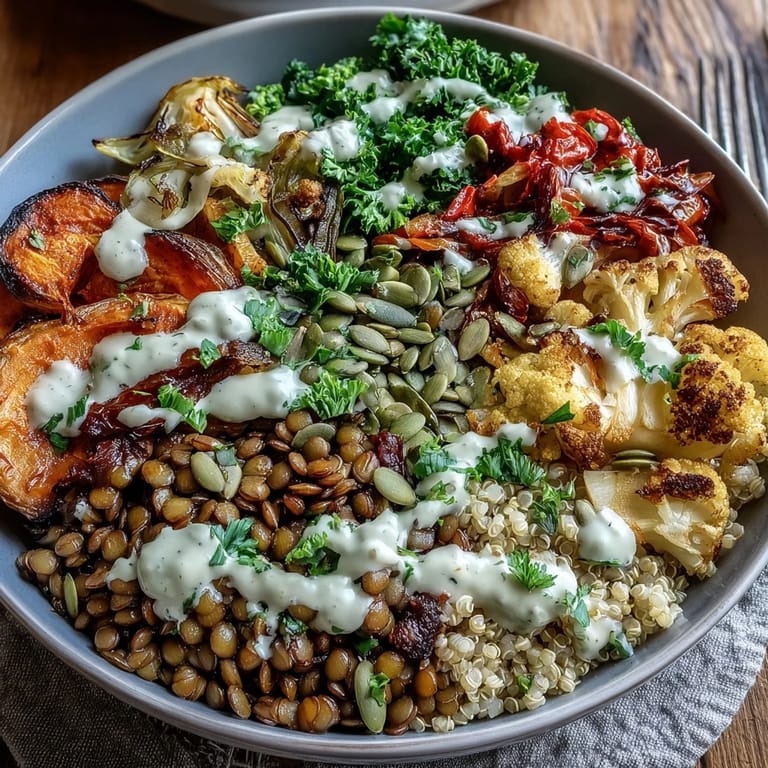
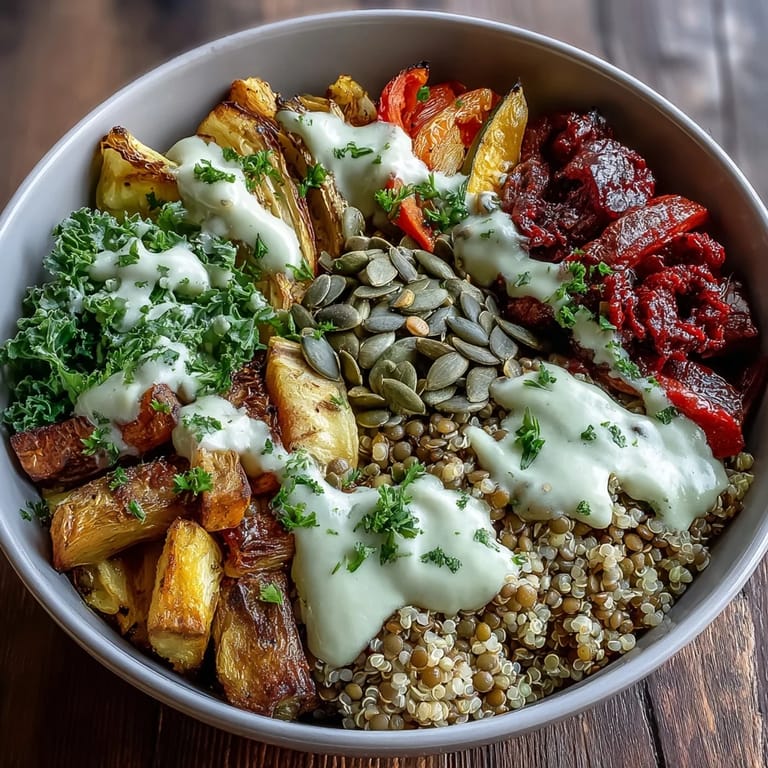
 A friend once showed up at my apartment on a gray Tuesday afternoon looking exhausted, and I realized the best thing I could offer was something that felt substantial but didn't require me to fuss for hours. That's when I started building these bowls—layering tender lentils over grains, piling on vegetables that had turned golden and sweet in the oven, then drizzling everything with tahini sauce that tasted like comfort had a flavor. It became my go-to for feeding people well, especially when life felt heavy and we needed something nourishing that also felt like love on a plate.
I made this for my partner when they came home after a particularly demanding week at work, and watching them eat in silence for a moment before looking up with this small smile—that's when I knew I'd nailed something. The combination of textures, the way the warm grains absorbed the dressing, how the roasted vegetables had this deep, almost caramelized flavor—it became our quiet ritual during stressful seasons.
Ingredients
- Quinoa or brown rice (1 cup): Choose whichever speaks to you—quinoa has a nuttier bite and more protein, rice is softer and more forgiving if you're learning.
- Water or vegetable broth (2 cups): Broth adds subtle depth, but water works perfectly if that's what you have.
- Green or brown lentils (1 cup, rinsed): Rinsing matters because it removes dust and makes them cook more evenly; they'll stay tender without turning to mush.
- Water for lentils (2 ½ cups): This ratio keeps them creamy without being soupy.
- Bay leaf: One small leaf transforms the lentils into something more refined, though you can skip it and they'll still be delicious.
- Salt (½ tsp plus to taste): Add it during cooking so the lentils absorb the flavor rather than just sitting on the surface.
- Sweet potato, peeled and cubed: Cut them roughly the same size as your other vegetables so everything roasts evenly and at the same pace.
- Red bell pepper, diced: The bright color matters as much as the flavor—it's what makes the bowl feel alive.
- Zucchini, sliced: Thinner slices mean it gets tender faster and develops those caramelized edges you're after.
- Red onion, sliced: The red deepens when roasted and adds a slight sweetness that balances everything.
- Olive oil (2 tbsp): Don't skimp here; it's what creates that golden, toasted exterior on the vegetables.
- Smoked paprika (1 tsp): This spice is the secret ingredient that makes people ask what makes these vegetables taste so good.
- Ground cumin (½ tsp): It whispers warmth without shouting; add a pinch more if you love it.
- Tahini (¼ cup): The foundation of the dressing—this is where quality matters, so grab the kind that separates naturally.
- Lemon juice (2 tbsp): Fresh lemon is non-negotiable; bottled just doesn't have the same brightness.
- Water for dressing (2 tbsp, plus more): This is how you transform thick tahini paste into something pourable and silky.
- Maple syrup (1 tbsp): Just enough to round out the sharp lemon and sesame flavors.
- Garlic clove, minced: One small clove is perfect; any more and it becomes aggressive.
- Pumpkin seeds and fresh parsley: These toppings add texture and freshness that transform the bowl from good to memorable.
Tired of Takeout? 🥡
Get 10 meals you can make faster than delivery arrives. Seriously.
One email. No spam. Unsubscribe anytime.
Instructions
- Heat your oven first:
- Get it to 425°F (220°C) while you're prepping because roasted vegetables need a hot, direct heat to caramelize properly. This step takes two minutes but makes all the difference.
- Toss and spread the vegetables:
- Combine the sweet potato, bell pepper, zucchini, and red onion in a bowl, drizzle with olive oil, then scatter the smoked paprika and cumin over everything and toss until each piece is lightly coated. Spread them on a baking sheet in a single layer (crowding causes steaming, not roasting) and let them go for 25-30 minutes, stirring halfway through, until the edges turn golden and caramelized.
- Start the lentils:
- While vegetables are roasting, combine rinsed lentils, water, bay leaf, and salt in a saucepan and bring to a boil. Reduce the heat and let them simmer gently for 20-25 minutes until they're tender but still hold their shape; you'll know they're done when you can easily crush one between your fingers but it doesn't fall apart on its own.
- Cook the grains:
- In a separate pot, bring water or broth to a boil and stir in your quinoa or rice, then reduce the heat and cover. Follow package instructions (usually 15-20 minutes), and when the time is up, fluff everything with a fork to separate the grains and let steam escape.
- Make the dressing:
- Whisk tahini, lemon juice, water, maple syrup, minced garlic, and salt in a bowl until smooth and creamy. If it's too thick, add more water one tablespoon at a time until you reach a drizzle-able consistency that still coats the back of a spoon.
- Assemble and serve:
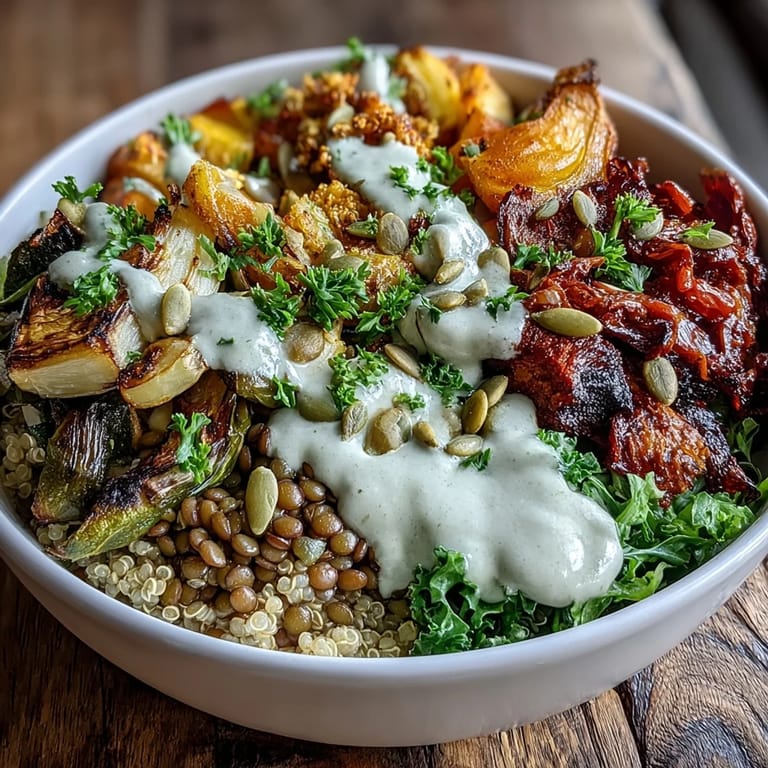
- Divide warm grains among bowls, top with lentils and roasted vegetables, then drizzle generously with tahini dressing. Finish with a scatter of pumpkin seeds and fresh parsley, then taste and adjust seasoning because your bowl might need a whisper more salt or lemon juice than your friend's.
 Bookmark
 There was a moment during a dinner party when someone asked for seconds of just the dressing on the side, and I realized this wasn't just lunch—it had become something people actually craved. That's when cooking stopped feeling like a task and started feeling like a language.
Why Grains and Legumes Matter Together
When you combine lentils with quinoa or rice, something small but important happens: you're creating a complete protein that your body recognizes and uses efficiently. I learned this not from a nutritionist but from noticing that meals built this way sustained me through long afternoons without that familiar dip in energy around three o'clock. It's not magic—it's just the way food is designed to work.
The Roasting Secret
The moment you stop treating roasted vegetables like a side dish and start treating them as the main event, everything changes. I learned this by accident when I set vegetables too close together and some parts cooked faster than others, creating these incredible caramelized edges. Now I deliberately give them space on the sheet and stir them halfway through, which concentrates the natural sugars and creates depth that raw or steamed vegetables simply cannot match.
Building Flavor Layers
The real magic isn't in any single ingredient—it's in how the smoked paprika whispers through the vegetables, how the tahini dressing brings everything together, how the fresh parsley adds brightness at the end. This bowl taught me that layering flavors is like building a conversation; one voice alone isn't as interesting as many voices in harmony. Start with the warm spices in the roasted vegetables, let the tahini add richness, and finish with acidic lemon and fresh herbs to keep it from feeling heavy.
- Taste as you build, adjusting salt and lemon juice to match your preference because every palate is different.
- Don't skip the pumpkin seeds—they add a textural contrast that makes every bite more interesting.
- Leftovers are best stored with the dressing on the side so the grains don't get soggy.
 Bookmark
 This bowl became my answer to the question of how to eat well without overthinking it, and I hope it becomes yours too. Make it once, then make it your own—swap grains, change vegetables with the seasons, adjust the dressing to match your mood.
Recipe Questions
- → Can I use different types of lentils?
Green or brown lentils work best as they hold their shape during cooking. Red lentils tend to become mushy and are better suited for soups or curries rather than bowls.
- → How do I store leftovers?
Store components separately in airtight containers. Grains and lentils keep for 4-5 days, roasted vegetables for 3-4 days, and the dressing for up to a week. Reheat grains and vegetables before assembling.
- → What other vegetables can I roast?
Try butternut squash, carrots, Brussels sprouts, cauliflower, or eggplant. Root vegetables work especially well and complement the earthy lentils and tahini.
- → Can I make this ahead for meal prep?
Yes, this bowl is excellent for meal prep. Cook all components in advance and store them separately. Assemble individual portions throughout the week, adding fresh toppings like herbs right before serving.
- → How can I add more protein?
Increase lentil portions, add chickpeas to the roasted vegetables, or top with sliced avocado and hemp seeds. The bowl already provides 16g of protein per serving from lentils and grains combined.
- → What can I substitute for tahini?
Cashew butter, almond butter, or sunflower seed butter work well as alternatives. Each brings a slightly different flavor profile while maintaining the creamy texture that complements the roasted vegetables.