 Bookmark
 Last summer, my neighbor showed up at my door with a bag of impossibly fragrant mangoes and peaches from her farmer's market haul, and I suddenly had to figure out what to do with more stone fruit than I'd ever handled at once. I'd been making regular iced tea for weeks, but something about those fruits sitting on my counter—releasing that sweet, almost floral perfume—made me want to try blending them right into the brew. That afternoon turned into one of those happy kitchen accidents where you're just playing around and end up with something you can't stop sipping.
I made this for a small gathering on my back porch, and what struck me most was how people kept coming back for refills without even asking—they'd just wander over to the pitcher like it was calling their name. One friend said it tasted like summer had been distilled into a glass, which seemed dramatic until I realized that's exactly what we were all chasing that day. It became the drink that year, the one people requested when they'd text about weekend plans.
Ingredients
- Water: Start with cold filtered water if you can, though tap works fine—it's the foundation for everything else to shine.
- Black tea bags: Four bags give you enough tannins for structure; green tea works if you prefer something lighter and more delicate.
- Ripe mango: Choose one that yields slightly when you squeeze it gently, with skin that's starting to show golden patches—this is where the natural sweetness lives.
- Ripe peaches: The smell should be your guide here, that peachy-sweet aroma that fills your kitchen means they're ready.
- Honey or agave syrup: This bridges the tea and fruit flavors, though you can skip it entirely if your fruit is particularly sweet.
- Fresh lemon juice: A tablespoon keeps everything from tasting flat, adding brightness without making it sour.
- Cold water: Two cups dilutes the concentrate to drinking strength—you can adjust this based on how intense you like it.
- Ice cubes: Use them to chill and also to slightly dilute as they melt, which sounds lazy but actually keeps the flavor from getting watered down too quickly.
- Fresh mint: The small tender leaves are best; tear them slightly as you add them rather than chopping, so you don't bruise the oils away.
Tired of Takeout? 🥡
Get 10 meals you can make faster than delivery arrives. Seriously.
One email. No spam. Unsubscribe anytime.
Instructions
- Steep the tea foundation:
- Bring water to a rolling boil, pull it off the heat, and add tea bags immediately—let them sit for exactly five minutes, no more or you'll get bitter tannins. The steam rising should smell welcoming, not harsh.
- Blend the fruit:
- Throw mango, peaches, honey, and lemon into your blender and go until it's completely smooth, watching how the color shifts from orange to something almost peachy-gold. This should take maybe thirty seconds on high speed.
- Strain if you're particular:
- Push the purée through a fine mesh sieve if you want that silky-smooth texture without any fiber, though honestly I often skip this step when I'm feeling casual about it. Some people love a little texture, some don't—you decide.
- Combine everything:
- Pour cooled tea into a pitcher, add fruit purée, and stir until the colors meld together into something cohesive. It'll smell like a tropical breeze just hit your kitchen.
- Chill the base:
- Add cold water and ice, stirring gently to bring the temperature down without diluting it too much yet. Taste here and adjust sweetness if needed—this is your moment to tweak.
- Awaken the mint:
- Add about half your mint leaves and mudddle them gently, pressing just enough to release those oils without shredding them into tiny pieces. You'll see the color deepen slightly and catch that mint scent rising up.
- Rest and chill:
- Refrigerate for at least fifteen minutes, which seems short but actually makes a difference in how cold and refreshing it feels. This waiting period is also when the flavors settle and marry together.
- Pour and refresh:
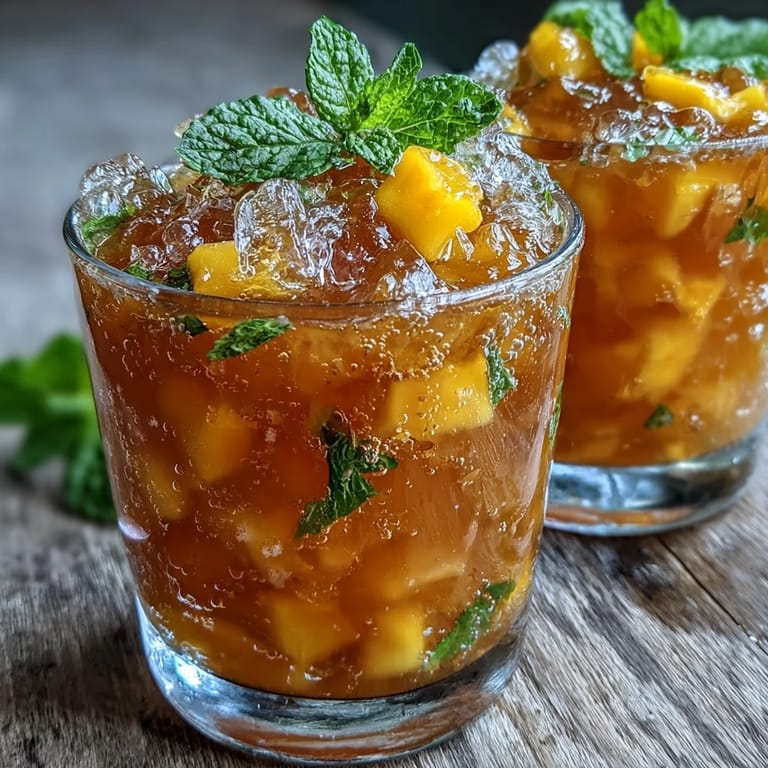
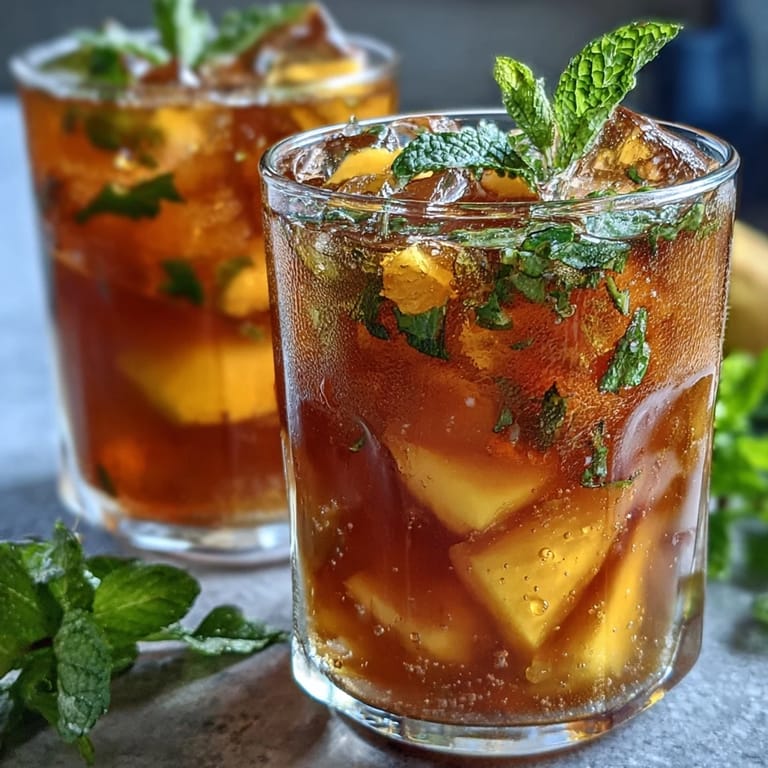
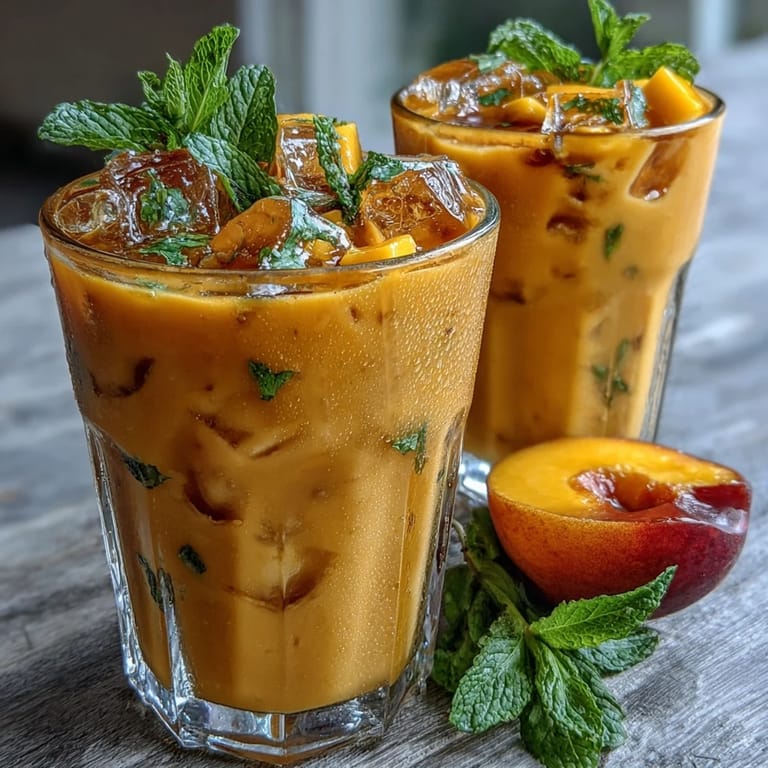
- Fill glasses with fresh ice, pour the tea over slowly so you get fruit flavor in every sip, and garnish with remaining mint and fruit slices. Serve immediately and watch people's faces light up.
 Bookmark
 There was this one afternoon when my teenager actually put down their phone to help me slice the garnish peaches, and we stood there chatting about nothing important while the fruit catch the sunlight coming through the window. That's when I realized this recipe had become more than just a beverage—it was an excuse to slow down and be present in the kitchen with someone you care about. Simple drinks somehow do that best.
Choosing Your Fruit
The magic of this drink really does depend on finding fruit that's at its peak, which means getting to know your produce aisle or farmers market on a personal level. I've learned to visit the same vendor on the same day each week, and they start setting aside the good stuff for me because they know what I'm making. A mango should feel heavy for its size with skin that gives just slightly to thumb pressure, and peaches should smell so good you can't help but close your eyes.
Making It Sparkle
If you're feeling fancy or want to surprise people, swap out some of the cold water for sparkling water right before serving—add it gently so you keep those bubbles intact. I discovered this by accident when someone brought over seltzer to a gathering, and now I can't imagine going back to the still version. It adds this playful effervescence that makes the drink feel like a special occasion, even on a random Tuesday.
Flavor Variations Worth Trying
Once you nail the basic version, the door opens to endless tweaking—a splash of lime juice for brightness, a whisper of vanilla extract for depth, or even a tiny pinch of cardamom if you're feeling adventurous. The beauty of this drink is how forgiving it is; you can push flavors around without ruining anything. Here are some ideas I've tested and loved.
- Add lime juice instead of or alongside lemon for a more tropical edge that plays beautifully with the mango.
- Swap in jasmine tea for the black tea to add a floral note that makes everything feel more delicate.
- Muddle a few basil leaves with the mint for an unexpected herbal complexity that feels fresh and modern.
 Bookmark
 This is the kind of drink that makes you feel generous, like you're offering something handmade and thoughtful instead of just pouring from a bottle. Pour it, share it, watch someone taste it for the first time, and you'll understand why I keep coming back to it.
Recipe Questions
- → What type of tea is used?
Black tea is used for a rich base, but green tea can be substituted for a lighter, fresher taste.
- → Can I adjust the sweetness?
Yes, sweetness can be modified using honey, agave syrup, or stevia to suit your preference.
- → Is it necessary to strain the fruit purée?
Straining removes fibers for a smoother texture but can be skipped if a thicker texture is preferred.
- → How should the mint be prepared?
Half of the mint leaves are gently muddled to release flavor and added to the drink, while remaining leaves can be used for garnish.
- → Can this drink be made sparkling?
Yes, replacing some cold water with sparkling water just before serving adds a fizzy twist.
- → What are suitable serving suggestions?
Serve over plenty of ice and garnish with mango and peach slices alongside fresh mint leaves for a vibrant presentation.