 Bookmark
 My kitchen smelled like toasted sesame oil the afternoon I first assembled this bowl, and I realized I'd been overthinking plant-based eating for months. A friend had texted a photo of something golden and vibrant on her plate, and I spent the next hour chopping vegetables like I was training for a cooking show. The magic wasn't in any single ingredient—it was how they all came together with that creamy peanut sauce that made me forget I wasn't eating chicken. Now it's the meal I make when I want to feel nourished without the fuss, or when I need to impress someone with minimal effort.
I made this for my roommate after she'd mentioned feeling stuck in a dinner rut, and watching her expression shift when she tasted it—from skeptical to genuinely delighted—made me realize this bowl deserved a permanent spot in our rotation. She kept saying it tasted like the kind of thing you'd pay twelve dollars for at a hip café, but we'd made it in our cramped shared kitchen with ingredients from the regular grocery store. That's when I knew I was onto something worth refining.
Ingredients
- Extra-firm tofu: Press it well before cooking—excess moisture is the enemy of crispiness, and a quick squeeze between paper towels makes the difference between soft and shatteringly golden.
- Cornstarch: This is your secret weapon for that crispy exterior; it creates a light crust that holds up beautifully under the sauce.
- Brown rice or quinoa: Either works, though quinoa adds a nutty texture and quinoa is naturally complete protein, making the bowl more filling.
- Colorful vegetables: The mix of raw and barely-cooked vegetables keeps everything bright and crunchy—don't skip the purple cabbage, its earthiness balances the sweet sauce perfectly.
- Edamame: Pre-cooked frozen edamame saves time and adds plant-based protein that makes this a genuinely sustaining meal.
- Creamy peanut butter: Use the good stuff without added oils or sugars; it whisks into the sauce more smoothly and tastes noticeably richer.
- Soy sauce or tamari: Tamari keeps this gluten-free if that matters to you, and it's worth having a bottle around.
- Maple syrup and rice vinegar: These balance each other—the sweetness against the tang—creating a sauce that's complex rather than one-note.
- Sesame oil: A small amount of toasted sesame oil carries a lot of flavor; don't substitute with regular sesame oil as it tastes completely different.
Tired of Takeout? 🥡
Get 10 meals you can make faster than delivery arrives. Seriously.
One email. No spam. Unsubscribe anytime.
Instructions
- Get your grains going:
- Start the rice or quinoa first since it takes the longest. Use vegetable broth instead of water if you have it—it adds subtle flavor that carries through the whole bowl.
- Prep the tofu:
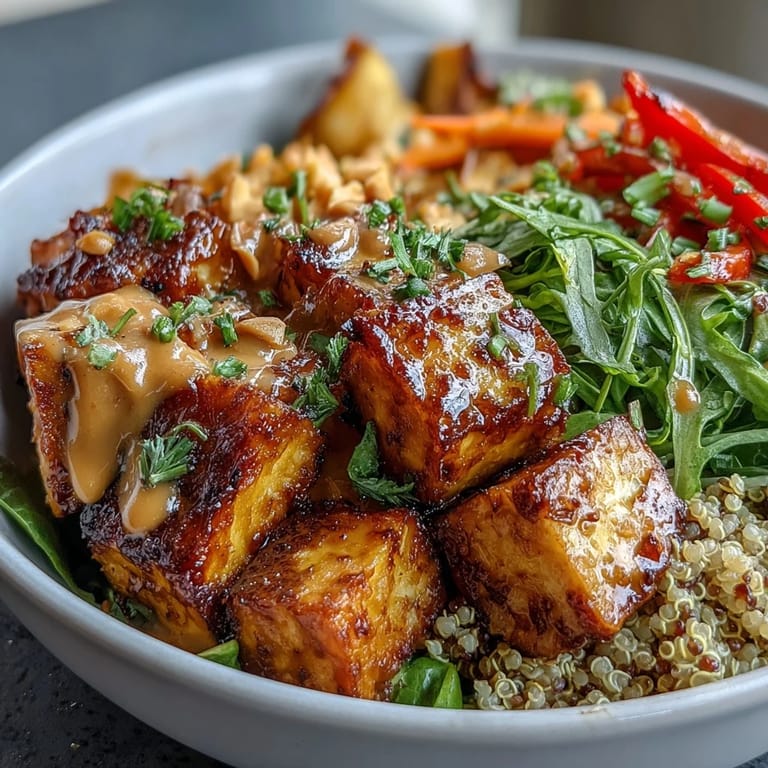
- Cut your pressed tofu into cubes about the size of walnuts, then toss gently with cornstarch and salt until every piece is lightly coated. The coating helps them crisp up rather than steam.
- Choose your cooking method:
- If using an oven, spread tofu on a baking sheet, drizzle with olive oil, and bake at 200°C for 20–25 minutes, turning halfway through until golden on all sides. If pan-frying, heat oil in a skillet over medium-high heat and cook tofu in batches until browned, about 3–4 minutes per side—don't crowd the pan.
- Make the peanut sauce:
- Whisk together peanut butter, soy sauce, maple syrup, rice vinegar, sesame oil, minced garlic, and ginger in a small bowl until smooth. Add warm water a tablespoon at a time until it reaches a drizzle-able consistency—it should pour but not be runny.
- Slice and prep the vegetables:
- Julienne the carrot into thin sticks, slice the bell pepper into strips, shred the purple cabbage, and slice the cucumber and spring onions. Prepare edamame if using frozen, then everything sits ready to assemble.
- Bring it all together:
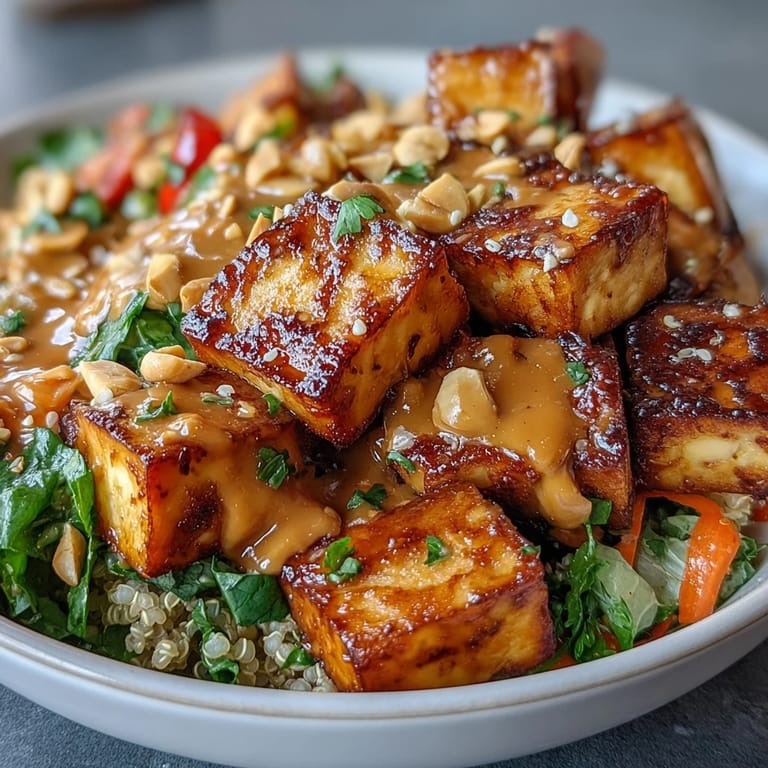
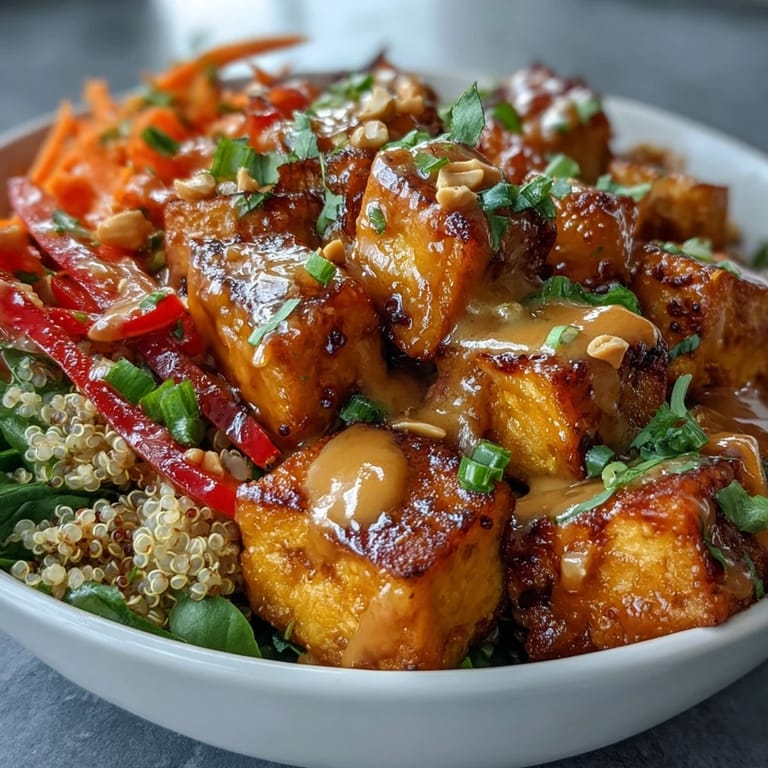
- Divide warm grains among four bowls, then arrange the crispy tofu and fresh vegetables in sections around the grain base. Drizzle sauce generously over everything, then scatter roasted peanuts, sesame seeds, and fresh herbs on top.
 Bookmark
 There was a moment last spring when I made four of these bowls for unexpected guests, and instead of feeling stressed about last-minute hosting, I was actually relaxed. Everyone assembled their own bowl the way they wanted, adjusting sauce amounts and toppings to their preference, and suddenly it became less like serving dinner and more like creating something together. That's when I realized this bowl works because it meets people where they are—satisfying if you're vegan, flexible if you're not, and genuinely delicious in a way that doesn't feel like compromise.
The Crispy Tofu Secret
Getting tofu crispy without an air fryer took some experimentation, but I found that the oven method with cornstarch is actually more reliable than pan-frying if you're cooking for a crowd. The even heat distributes better, and you don't have to babysit the pan, flipping pieces constantly like you're performing some delicate kitchen dance. The cornstarch coating is what creates that satisfying texture—it's almost like a light batter that crisps up without being heavy or greasy.
Customizing Your Bowl
The beauty of this bowl is that it's a template rather than a rigid formula—I've made versions with roasted sweet potato and broccoli on cold fall evenings, and lighter versions with just cucumber and fresh herbs when summer makes you want to eat only cool, refreshing things. Adding avocado turns it into something more luxurious, while keeping it simple with just the vegetables and sauce keeps it clean and focused. Experiment with what's in season or what you're craving; the sauce and crispy tofu anchor everything.
Making It Ahead
I often prepare the components separately and assemble right before eating, which keeps everything at its best texture. You can cook the grains and tofu a few hours ahead, chop all the vegetables the night before and store them in containers, and whisk together the sauce in the morning—then the actual assembly is a five-minute task. The only thing I wouldn't do ahead is combine everything in a single container, since the vegetables release moisture and the sauce distributes unevenly, making it less appealing by lunchtime.
- Store tofu and grains in separate airtight containers in the refrigerator for up to three days.
- Keep the peanut sauce in a jar and give it a good shake before using, since the oil can separate.
- Pack the vegetables in a container with a paper towel to absorb excess moisture and keep everything crisp.
 Bookmark
 This bowl became my answer to the question of how to eat well without spending hours in the kitchen or feeling like you're settling for less flavor. It's the kind of meal that nourishes you while tasting genuinely good, which is maybe the most honest thing a recipe can offer.
Recipe Questions
- → How do I get crispy tofu?
Press tofu to remove excess moisture, then coat cubes in cornstarch before baking at 200°C for 20–25 minutes or pan-frying until golden brown on all sides.
- → Can I make this gluten-free?
Yes, simply use tamari instead of soy sauce and ensure all other ingredients are certified gluten-free.
- → How long does the peanut sauce keep?
The sauce stores in an airtight container in the refrigerator for up to one week. Thin with warm water before serving if needed.
- → What grain alternatives work well?
Brown rice and quinoa are excellent choices. For lower carbs, try cauliflower rice or soba noodles for a Japanese-inspired twist.
- → Can I prep this bowl ahead?
Cook grains and roast tofu in advance. Store vegetables separately and assemble bowls fresh, drizzling with sauce just before serving.
- → How can I add more protein?
Increase tofu portion, add extra edamame, or incorporate roasted chickpeas. Shredded hemp seeds also boost protein content.