 Bookmark
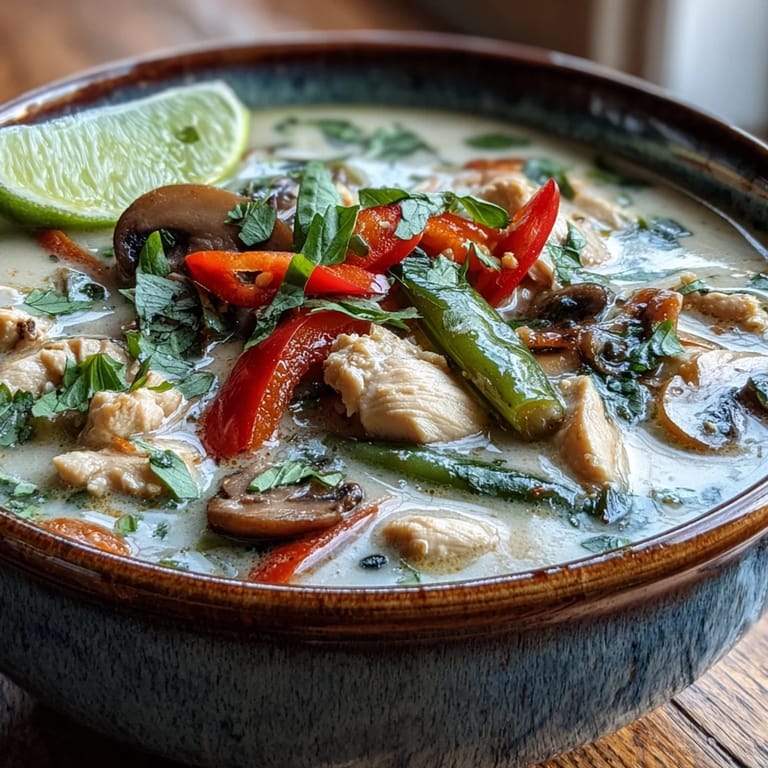
 There's a Thursday evening I keep thinking about when my neighbor brought over a container of homemade red curry paste, still warm from her mortar and pestle, and suddenly my kitchen smelled like another world entirely. She stayed for dinner, and while we sipped this soup, she told me stories about street vendors in Bangkok and how they'd layer flavors so carefully that each spoonful felt like a small discovery. That night, I learned that the best soups aren't just about feeding people—they're about creating a moment where everyone slows down.
I made this for my daughter's study group last fall when she was stressed about midterms, and something shifted—the kitchen filled with that golden steam, and suddenly five tired students were laughing and asking for seconds. One of them said it tasted like a hug, which made me realize that simple, aromatic food does something to people that fancy plating never could.
Ingredients
- Chicken thighs or breasts (400 g): Thighs stay juicier and more forgiving than breasts, but honestly, either works—just cut them into pieces roughly the size of a walnut so they cook evenly.
- Fresh ginger (1 tbsp, grated): The warmth here is essential; don't skip it or use ground ginger, which tastes like an afterthought.
- Garlic (3 cloves, minced): Mince it fine so it distributes through the broth rather than sitting in chunks.
- Shallots (2, thinly sliced): They soften into the broth and add a sweetness that balances the heat.
- Red curry paste (2 tbsp): Buy the real stuff in a jar or can from the Asian section—it's worth it and keeps for months.
- Coconut milk (400 ml, full-fat): Full-fat is non-negotiable here; it's what gives the broth its silky texture and authentic flavor.
- Chicken broth (750 ml): Use good broth, not the watery kind—it's the foundation of everything.
- Fish sauce (1 tbsp): I know it smells funky from the bottle, but it dissolves into the soup and creates depth you can't replicate any other way.
- Soy sauce (1 tbsp, gluten-free if needed): Use tamari if you need it gluten-free; the flavor is nearly identical.
- Brown sugar (1 tsp): Just enough to round out the heat and salt, never making the soup taste sweet.
- Lime juice (1 lime): Squeeze it fresh right before serving; bottled lime juice is disappointing and tastes flat.
- Red bell pepper (1, sliced): It softens into the broth and adds color and subtle sweetness without dominating.
- Shiitake mushrooms (100 g, sliced): They add an earthy umami that makes the soup feel more substantial.
- Snow peas (100 g, trimmed): They stay crisp-tender and add a bright green contrast to the golden broth.
- Fresh cilantro and Thai basil for garnish: These are not optional—they're what take the soup from good to memorable.
Tired of Takeout? 🥡
Get 10 meals you can make faster than delivery arrives. Seriously.
One email. No spam. Unsubscribe anytime.
Instructions
- Build Your Aromatics:
- Heat oil in a large pot over medium heat and let the shallots, ginger, and garlic sizzle for about 2 minutes—you'll know it's right when the smell makes you pause and take a deeper breath. The kitchen should start to smell warm and alive.
- Bloom the Curry Paste:
- Stir in the red curry paste and let it cook for a minute, which releases all those layered spices and makes the oil around it turn a deeper red. This step matters more than you'd think.
- Coat the Chicken:
- Add your chicken pieces and stir for 2 to 3 minutes so they get coated in the curry and aromatics, which starts cooking them gently and infuses them with flavor. They don't need to be fully cooked yet—just kissed by the heat.
- Create the Broth:
- Pour in the chicken broth and coconut milk together and bring everything to a gentle simmer—not a rolling boil, which would make the chicken tough. You want a soft, steady bubbling.
- Season and Balance:
- Stir in the fish sauce, soy sauce, and brown sugar, tasting as you go because everyone's broth preferences are different. This is where the soup goes from aromatic to craveable.
- Cook the Vegetables:
- Add the bell pepper, mushrooms, and snow peas and let them simmer for 10 to 12 minutes until the chicken is cooked through and the vegetables are tender but still have some life. The snow peas should still have a little snap to them.
- Finish with Brightness:
- Squeeze in the lime juice and taste one final time, adjusting with a pinch more fish sauce or lime if it needs it. Sometimes it needs just a hair more sweetness too.
- Serve with Intention:
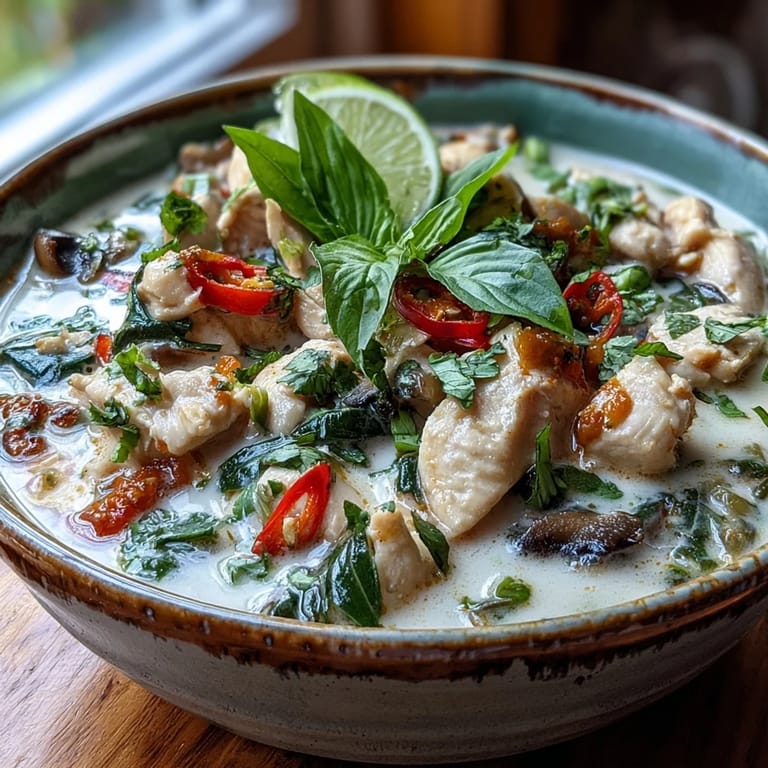
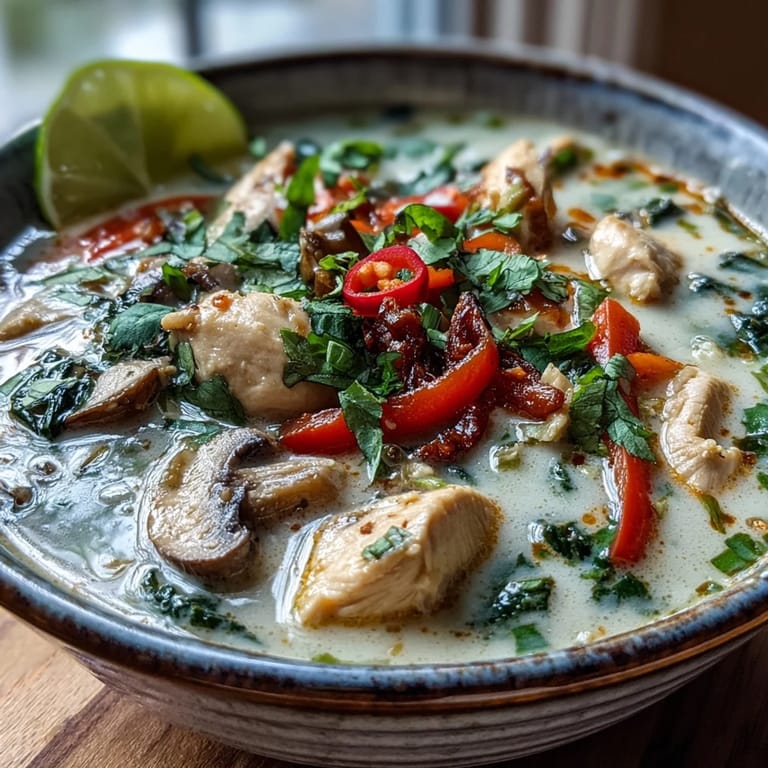
- Ladle the soup into bowls and scatter cilantro, Thai basil, sliced red chili if you like heat, and a lime wedge on top. The garnishes matter—they add freshness and let people customize their own bowl.
 Bookmark
 I think about how my best meals are never the ones I stressed over—they're the ones where I just trusted my instincts and let the flavors speak for themselves. This soup taught me that.
Swapping Proteins and Making It Your Own
Shrimp cooks faster than chicken, so add it for the last 4 to 5 minutes, and it'll curl up pink and tender without becoming rubbery. Tofu is gentler on the palate and soaks up the broth beautifully if you use firm tofu, cubed and added at the same time as the vegetables. I've even made this with leftover rotisserie chicken on nights when I'm too tired to cook protein from scratch, and nobody noticed or cared—they just wanted the soup.
Making It Heartier
If you want this to be a full meal rather than a starter, stir in cooked rice noodles or a scoop of jasmine rice right before serving, and suddenly it's substantial enough for dinner without feeling heavy. Some people add a handful of spinach at the very end, which wilts in seconds and adds iron and color.
Storing and Reheating
This soup keeps beautifully in the refrigerator for three days and actually tastes better the next day because the flavors have more time to get to know each other. Reheat gently over medium heat without boiling, and add the garnishes fresh each time because they lose their brightness if they sit in the broth overnight.
- Keep the cilantro and Thai basil separate and add them just before eating so they stay vibrant and aromatic.
- If the soup thickens as it sits, thin it with a splash of chicken broth when you reheat it.
- Freeze it for up to three months in airtight containers, though the snow peas will lose some crunch—still delicious, just softer.
 Bookmark
 This is the soup I make when someone needs comfort, when the weather shifts cold, or when I just want to remember why cooking matters. It's simple enough not to intimidate, but aromatic enough to feel like you've done something special.
Recipe Questions
- → Can I use chicken breasts instead of thighs?
Yes, chicken breasts work perfectly fine. However, thighs tend to stay more tender and juicy during simmering. If using breasts, be careful not to overcook them to maintain moisture.
- → What can I substitute for fish sauce?
For a vegetarian option, use soy sauce or tamari with a pinch of seaweed flakes for umami depth. You can also try coconut aminos for a soy-free alternative, though the flavor will be slightly different.
- → How do I make this soup spicier?
Increase the red curry paste to 3-4 tablespoons, add fresh sliced Thai chilies during cooking, or garnish with chili oil. You can also include a pinch of cayenne pepper for extra heat.
- → Can I prepare this soup ahead of time?
Absolutely. The soup actually develops deeper flavors when refrigerated overnight. Store in an airtight container for up to 3 days. The coconut milk may separate, so stir well when reheating gently over medium heat.
- → What vegetables can I add or substitute?
Bok choy, baby corn, bamboo shoots, zucchini, or broccoli all work wonderfully. Add heartier vegetables like carrots earlier in the cooking process, and delicate greens like spinach just before serving.
- → Is full-fat coconut milk necessary?
Full-fat coconut milk creates the rich, creamy texture that defines this soup. Light coconut milk will work but results in a thinner, less luxurious broth. For best results, stick with full-fat.