 Bookmark
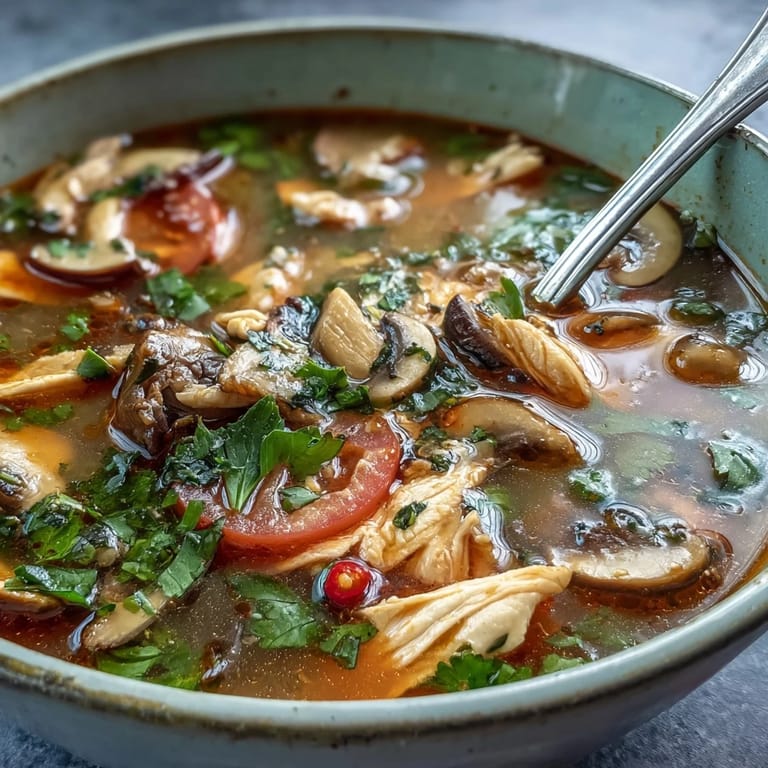
 The first time I tasted authentic Tom Yum Gai, I was sitting in a cramped Bangkok street stall at dusk, and the steam from the bowl fogged my glasses before I even lifted the spoon. That singular moment—the heat, the pucker of lime, the way the lemongrass made my mouth feel alive—stayed with me for years until I finally attempted it at home. Now, whenever I simmer that broth, the smell transports me back instantly, and I've learned that this soup isn't just about following steps; it's about understanding how each ingredient builds on the last to create something that feels both comforting and thrilling.
I once made this for a friend who was recovering from a cold, and she swore the heat from the chiles and the brightness of the lime actually helped her breathe better. The moment she asked for seconds, I realized that this soup does something special—it nourishes not just your belly but your spirit somehow.
Ingredients
- Boneless, skinless chicken breast or thighs (350 g): Thighs stay more tender if you're not careful with timing, but breast works beautifully if you slice it thin and don't let it simmer too long.
- Chicken stock (1.2 L): Use homemade if you can—it deepens everything—but good quality store-bought is honest work too.
- Lemongrass (2 stalks): Remove those tough outer layers and smash it gently; this releases the essential oils that make the broth sing.
- Kaffir lime leaves (5): These are non-negotiable for authentic flavor, but if you can't find them, a strip of regular lime zest is your backup plan.
- Galangal (3 slices): This root adds a peppery, slightly medicinal warmth that ginger mimics but doesn't quite replicate; I've used both and the difference is subtle but real.
- Thai bird's eye chiles (2): These pack serious heat, so start with one if you're sensitive and build from there.
- Oyster or button mushrooms (150 g): Slice them uniform so they cook evenly and don't turn to mush while you're waiting for the chicken.
- Tomatoes (2 medium): Fresh and ripe matter here; canned will work in winter, but the color and brightness of fresh is worth seeking out.
- Nam prik pao (2 tbsp): This roasted chili paste is the secret weapon that gives the broth its deep, complex kick—it's worth tracking down in an Asian market or online.
- Fish sauce (2 tbsp): It smells challenging in the bottle, but trust it; it dissolves into the broth and becomes pure umami.
- Lime juice (2 tbsp plus extra): Squeeze it fresh just before serving so the acidity stays bright and alive.
Tired of Takeout? 🥡
Get 10 meals you can make faster than delivery arrives. Seriously.
One email. No spam. Unsubscribe anytime.
Instructions
- Build the aromatic base:
- Bring your chicken stock to a gentle boil in a large saucepan, then add the lemongrass pieces (they should be smashed so they release their fragrance), torn kaffir lime leaves, galangal slices, and smashed chiles. Let this simmer quietly for 5 minutes—you'll see the broth begin to turn golden and smell absolutely incredible.
- Cook the chicken through:
- Slip in your thinly sliced chicken and let it simmer for 3 to 4 minutes until the pieces turn opaque and cooked through. Skim off any white foam that rises to the surface; this keeps the broth clear and clean-tasting.
- Add the vegetables:
- Stir in your sliced mushrooms, tomato wedges, and onion. Simmer for another 3 to 4 minutes until the vegetables soften just enough to bite easily but still hold their shape.
- Layer in the bold flavors:
- Add the nam prik pao, fish sauce, sugar, and salt, stirring everything together well. Let it simmer for 2 more minutes so those seasonings marry with the broth instead of sitting on top.
- Brighten with lime:
- Remove from heat and stir in your fresh lime juice. Taste it now—does it need more sourness, more salt, more heat? This is your moment to adjust until it feels right on your palate.
- Serve with intention:
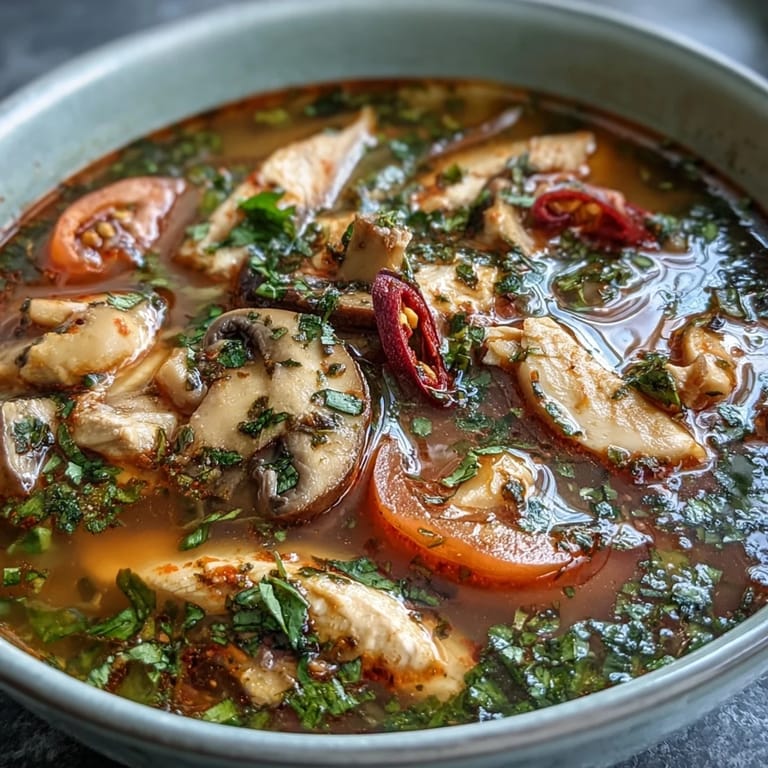
- Ladle the soup into bowls, top with fresh cilantro and those optional sliced chiles if you want even more heat, and set lime wedges on the side so everyone can adjust their own bowl. Serve immediately while the broth is still steaming.
 Bookmark
 There's a moment when the soup is just right—when you take that first spoonful and all the components click into place, and you understand why this soup has sustained people through centuries of Thai cooking. That's when you know you've got it.
The Art of Balance
Tom Yum Gai is essentially a conversation between four flavors: spicy, sour, salty, and slightly sweet. The trick is listening to how they're talking to each other and adjusting until they're in harmony. I learned this by making the soup multiple times and tasting at every stage, which taught me that fish sauce handles saltiness, lime handles sourness, the chiles and nam prik pao handle heat, and just a whisper of sugar rounds everything together. You'll notice that the recipe doesn't call for tons of sugar—it's there to balance, not to sweeten, so resist the urge to add more unless the soup tastes aggressively sour.
Why Slice the Chicken Thin
Thin slices of chicken cook in just a few minutes, which means the meat stays tender and delicate instead of turning stringy or tough. This is a lesson I learned the hard way by adding thick chunks and watching them turn into rubber while I wasn't paying attention. When chicken is sliced thin—almost like you're preparing it for a stir-fry—it treats the simmering broth like a gentle embrace rather than a harsh workout.
Making It Your Own
The beauty of Tom Yum Gai is that it welcomes creativity while staying true to itself. Some people add a tablespoon of evaporated milk to the broth for a slightly creamier version called Tom Yum with milk, which softens the edges while keeping the heat alive. Others swap shrimp for chicken to make Tom Yum Goong, which cooks even faster and has a different kind of sweetness. You can also add more vegetables like baby bok choy, snap peas, or even fresh bamboo shoots if you want more texture, or dial back the chiles if you're cooking for people who aren't brave with heat.
- If you can't find nam prik pao, combine 1 tablespoon of Thai chili paste with 1 teaspoon of fish sauce and a pinch of sugar as a substitute.
- Kaffir lime leaves can sometimes be found frozen, and they work almost as well as fresh—just add them straight from the freezer without thawing.
- Always taste and adjust at the end because everyone's tolerance for heat, salt, and sourness is different, and that's the whole point of cooking for yourself.
 Bookmark
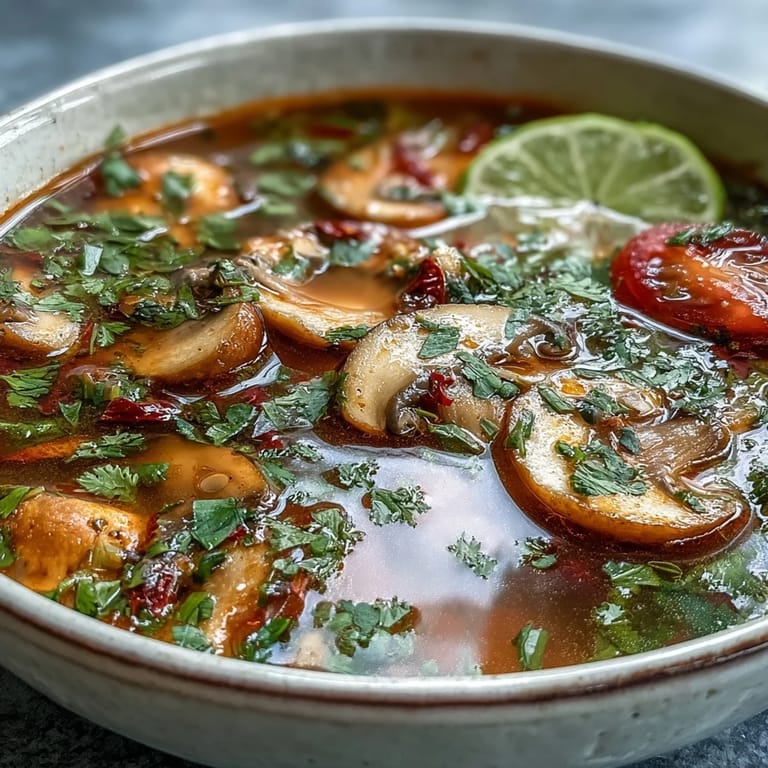
 This soup is proof that simple techniques and honest ingredients can create something that tastes like you've been cooking for hours. Serve it proud, and let people experience what made you fall in love with it in the first place.
Recipe Questions
- → What is Tom Yum Gai?
Tom Yum Gai is a traditional Thai hot and sour soup made with chicken (gai means chicken in Thai). It features a fragrant broth infused with lemongrass, kaffir lime leaves, galangal, and Thai chiles, finished with lime juice and fish sauce for a bold, spicy-sour flavor profile.
- → Can I substitute ingredients if I can't find galangal or kaffir lime leaves?
Yes, fresh ginger works as a substitute for galangal, though the flavor will be slightly different. If kaffir lime leaves are unavailable, you can use regular lime zest, though the aromatic quality won't be quite as authentic. Thai or Asian grocery stores typically stock these ingredients.
- → How spicy is Tom Yum Gai?
The spice level is adjustable based on the number of Thai bird's eye chiles used. Start with 2 chiles for moderate heat, or reduce to 1 for milder flavor. You can always add more chiles as garnish to increase spiciness according to your preference.
- → What is nam prik pao and can I make it myself?
Nam prik pao is Thai roasted chili paste, a key ingredient that adds depth, sweetness, and smokiness to Tom Yum. While you can find it in Asian markets, you can substitute with a mixture of chili paste and a touch of tamarind paste, though the flavor will differ from authentic versions.
- → Can I use shrimp instead of chicken?
Absolutely! Substituting shrimp for chicken creates Tom Yum Goong, another beloved variation. Use peeled and deveined shrimp, adding them in step 2 and cooking just until they turn pink and opaque, about 2-3 minutes.
- → How should I store and reheat leftovers?
Store Tom Yum Gai in an airtight container in the refrigerator for up to 3 days. Reheat gently on the stovetop over medium heat. Add fresh lime juice after reheating to brighten the flavors, as the sourness can diminish during storage.